Annual leave in Saint Lucia is governed by the Labour Act Chapter 16.02, which sets minimum entitlements based on length of service. Understanding how leave accrues, and how to calculate it correctly on termination, is a practical necessity for any business that employs more than a handful of staff.
The two accrual rates
The Labour Act sets two accrual rates depending on how long the employee has been with the business:
Annual leave accrual rates: Labour Act Chapter 16.02
- Under 5 years of service: 1.167 days per month (14 days per year)
- 5 years of service and over: 1.75 days per month (21 days per year)
The service threshold is calculated from the employee's original start date, not from any probation end date.
Accrual is calculated monthly from the start date. An employee who started on 1 March will have accrued 1.167 days by 31 March, 2.334 days by 30 April, and so on.
When the higher rate kicks in
The shift from 1.167 to 1.75 days per month happens when the employee reaches exactly five years of service. If an employee's fifth work anniversary falls in the middle of a month, apply the higher rate from the beginning of that month.
Leave balances and the leave year
Some businesses operate a leave year that resets on a fixed date: 1 January, or the employee's work anniversary. Others allow leave to carry forward indefinitely. The Labour Act sets minimum entitlements but does not prohibit more generous policies. Whatever policy you apply must be consistent and documented.
An employee cannot have their leave entitlement reduced below the statutory minimum regardless of what a contract says.
What happens to leave on termination
When employment ends (whether by resignation, dismissal, or redundancy), the employee is entitled to be paid for any outstanding annual leave balance. This is calculated as:
Proportional vacation pay = (accrued balance ÷ 1) × daily rate
Where the daily rate is the employee's monthly salary divided by the number of working days in the month (typically 22).
Leave in deficit on termination
If an employee has taken more leave than they have accrued at the point of termination, the employer can legally deduct the excess from the final pay. This deduction must be documented and agreed in the employment contract. If there is no such clause, enforcing the deduction is more difficult.
Sick leave is tracked separately
Sick leave does not accrue in the same way as annual leave. Under the Labour Act, employees are entitled to sick leave with pay for a period specified in the contract (minimum two weeks per year is standard practice). Sick leave taken does not reduce annual leave balances.
Why tracking matters
An untracked leave balance is a liability sitting unrecorded on your books. If every employee in a business of 15 people has taken no leave for 18 months, you have a significant accrued leave obligation. Tracking balances monthly, even informally, prevents surprises at termination and gives employees visibility over what they are entitled to.
What to Keep on Record
- Each employee's start date, used to determine the accrual rate
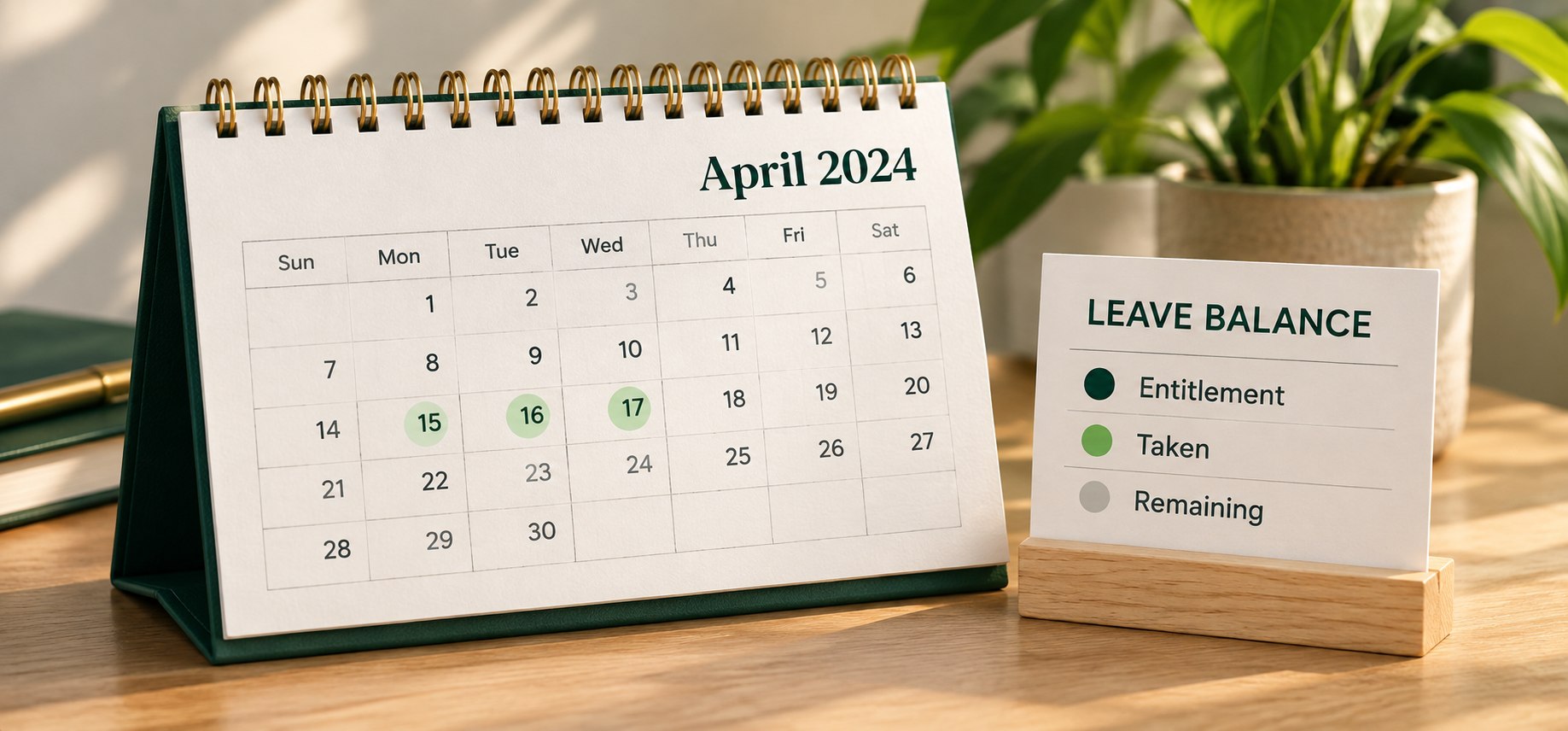
- Leave taken, by date, set against the accrued balance
- The current running balance for every active employee
- Any deduction agreed and documented for leave taken in excess of accrual
SafeDocs Leave Management tracks accrual, balances and the leave year automatically, and applies the correct rate as service length changes.
See How Leave Management Works